The Dark Ages by Default
Listen to this article
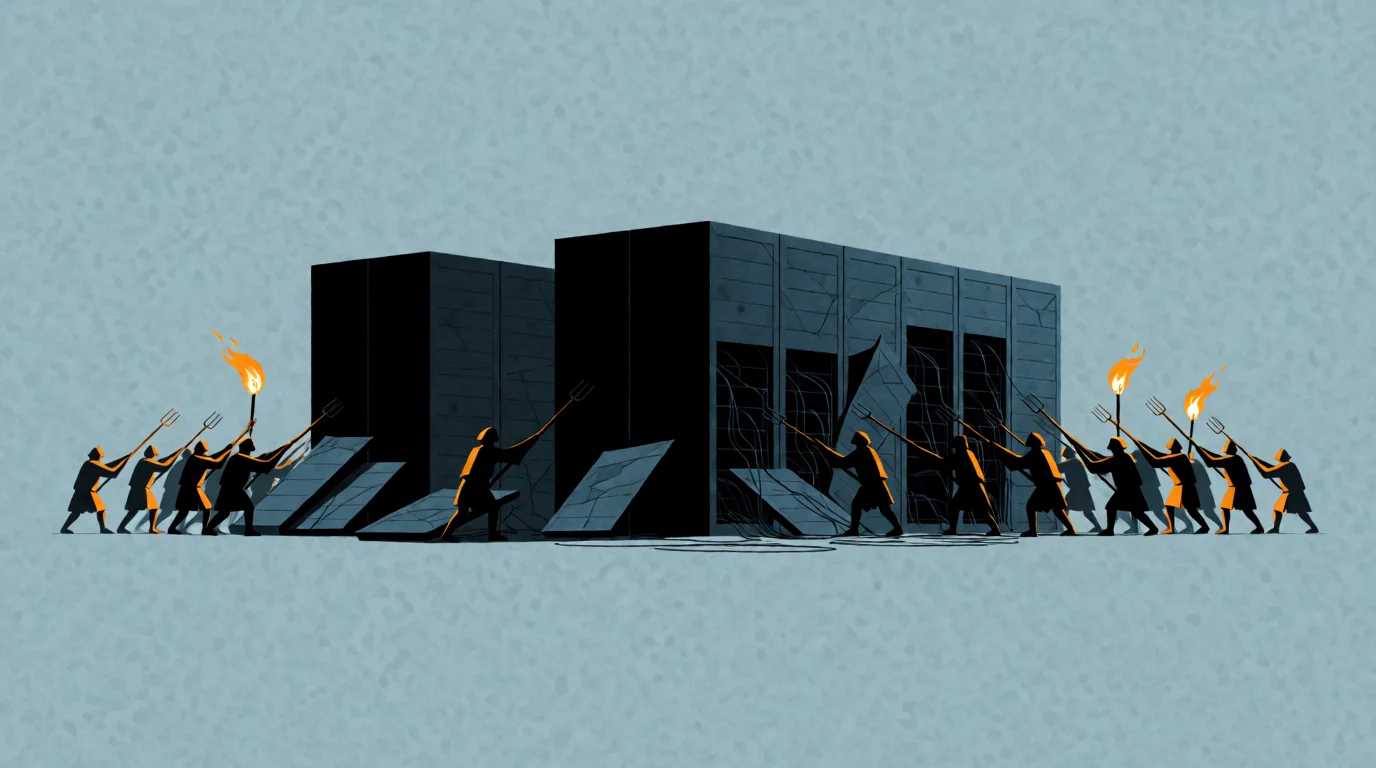
There is no normal version of the future left. Even the best AI outcome changes everything—and the time to choose our version is running out.
Watching German politics and the press, I still see the old game played with great concentration: the same parties, the same scandals, the same fights over budgets and jobs. AI appears as a tech segment, if at all, before the broadcast returns to familiar ground.
On social media, almost everyone I read argues over which future is arriving too fast—new capabilities, disappearing work, machine consciousness, the end of the economic order. The gap between these two worlds has started to feel absurd.
The elephant in the room is not whether AI speeds up office work, but whether human intelligence and labor stop anchoring society altogether. No outcome leaves the current world intact.
Every future is radical
Suppose it goes well. Machines take over most cognitive work and, eventually, much physical work too. Output surges, costs drop, and what once required big organizations becomes cheap.
That alone ends the world our politics knows how to discuss.
Our settlement runs through work. Wages distribute income, payroll taxes fund much of the welfare state, education promises a job, and status clings to occupations. People who are needed can bargain because they can withdraw their labor.
If labor loses that role, we do not merely need a better retraining program; we need to explain a different society. Who owns the machinery and its output? What replaces the wage as the route to a decent life? What happens to political power when workers can no longer strike?
The failure can be economic as well as political. Production is not purchasing power: if output climbs while wages vanish, we get full warehouses and empty accounts. Lower prices cannot replace a missing income. An economy can produce more than ever and still break down.
Human worth does not hang on any of this. Art, friendship, curiosity, and the pleasure of understanding something need no labor market to justify them. Our material security currently does. Confusing the two is how people conclude you must earn the right to exist by doing work a machine no longer needs done.
No future spares us these questions. Broad abundance, concentrated ownership, uncompensated displacement, or a long fight over automation's costs—none preserves the world as it is.
Radical change is not one scenario among others. It is the one thing every scenario shares.
That shifts the political target. Our reflex is to regulate the machine—its uses, safety, and mistakes. Those rules matter, yet growth and power are escaping the old institutional container. Regulating the producer while leaving ownership of the output untouched does not govern the new economy; it guards the outline of the old one.
When labor stops distributing income, the distribution of wealth stops being a socialist slogan and becomes economic maintenance.
A good version still exists. The same productive capacity could buy health, security, free time, and freedom. In Why the Fuck Not?, I argued that the point of a richer society is not ten times as much stuff, but human dignity with fewer conditions attached. None of it arrives by default.
The old game cannot see the new one
It would be comforting to think the people in charge are stupid. They are not; they are often formidable at the game that selected them.
Institutions reward procedural fluency, caution, persistence, access, and the knack for applying pressure without breaking the furniture. Those skills protect stability and established power at once. No conspiracy or secret room is required.
Excellence under the old rules does not teach you what happens when the rules change. A challenger with machine leverage and no loyalty to old gatekeepers may move in ways incumbents never expect. That makes a power shift plausible, not inevitable, and certainly not automatically better. Someone worse can write the next rulebook.
Even if today's elites keep every seat, the ground beneath those seats is shifting. Winning the old game offers no shelter from that.
The choice has a deadline
Here is what I can no longer get past: we may be out of time for the usual slow cycle of noticing, debating, and gradually adapting.
Not because a prophet gave us a date, but because choices harden into infrastructure.
Companies, public agencies, media, education, and militaries are wiring AI into their operations. Each adoption can look reasonable alone, yet together they lock in dependencies, ownership, contracts, habits, and careers. By the time the public sees where the road leads, the way back may already be blocked.
The window for choosing our fate may be closing fast. In some areas, it may already be shut.
A dependency with a lobby, a procurement contract, and a national-security rationale is no longer a proposal; it is the environment where the next proposal gets made.
Another round of careful committees feels inadequate. We cannot pencil in a calm debate after the next election and assume the options will wait.
Darkness by default
I do not know whether this ends in abundance, authoritarian management, economic breakdown, or war. Watching current politics makes some endings look closer than others, but that feeling is not foresight.
What is clear is that the conditions for disaster are piling up without serious public debate: concentrated ownership, weakened labor, machine-speed decisions, and institutions still reasoning in old categories. Whatever the eventual trigger, those conditions narrow the peaceful exits.
The danger is real before the outcome is certain. This needs a society-wide conversation now, while politics can still turn that conversation into different decisions.