I'm the Limiting Factor
Listen to this article
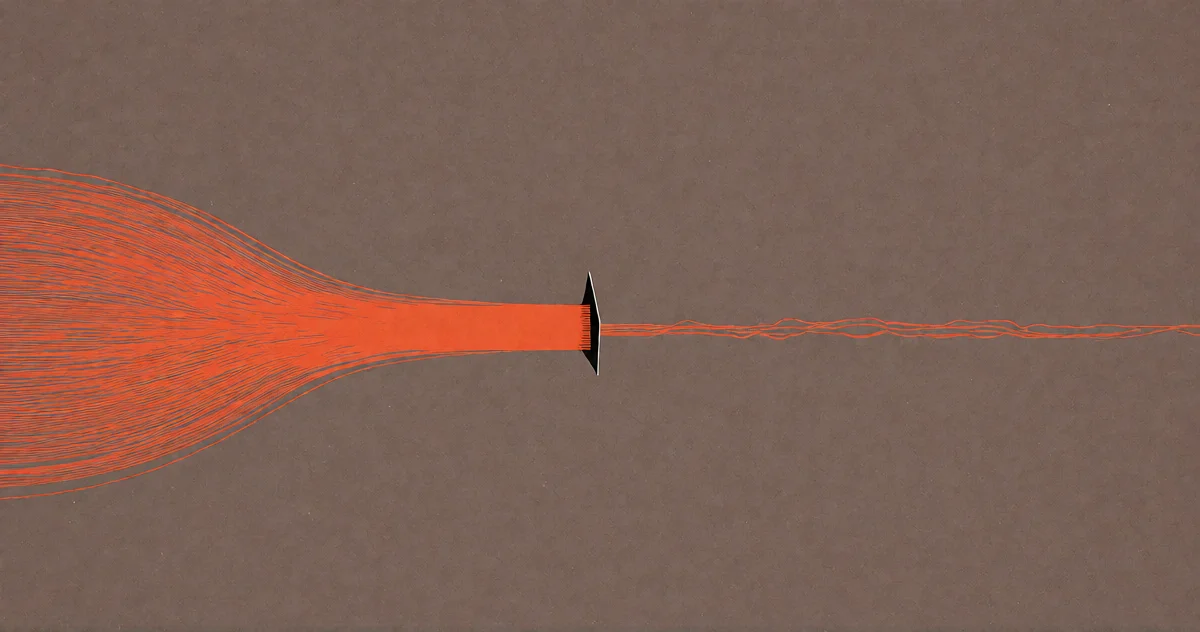
Try this. Give an AI a task. Then give it the same task again — but describe it better.
Don't compare your output to the AI's. That's the wrong experiment, and most people run it poorly. They feed a vague prompt, get a vague result, and walk away confirmed: "See? It's stupid." That's not a test. That's a self-fulfilling prophecy. Bad input produces bad output, and bad output justifies never learning to give good input. The loop is perfect.
Skip the comparison. Instead, watch what happens when you improve. Refine the prompt. Add constraints. Clarify the context. Specify the shape of what you want. Then compare the AI's first result to its third. Or its fifth.
The difference is not subtle.
And the difference doesn't come from prompting tricks. There are none worth the name. The prompt is not the input. The thought is the input — the prompt is just where the thought becomes visible. Vague output is usually a vague wish in costume. Most of us have never had our thinking reflected back at us this precisely, and the first encounters are not flattering. You ask for something, receive exactly what you asked for, and discover that what you asked for is not what you wanted. The failure was never in the machine's reading. It was in your wishing.
Asking well has parts. It means knowing what success looks like before you start — and, harder, what failure looks like. It means holding the whole problem still long enough to describe it. It means saying what you don't want, which is where most of the information lives.
About a year ago, I stopped noticing whether the AI was getting better. I started noticing that I was. My ability to formulate — to think clearly enough about what I want that I can describe it precisely — had become the only variable that mattered. The AI was constant. I was the moving part. And the better I got at defining the problem, the better the solution became, until the AI was consistently producing work I couldn't match on my own.
I'm reasonably bright. Thirty-plus years of coding. Good at what I do. And I am the limiting factor. Not in some abstract future. Now.
This is the part where people get uncomfortable, because they know me and they know I'm not stupid. But intelligence was never the gate. Precision was. And precision is learnable — cheaper than it has ever been, because a vague wish costs you a regenerated answer instead of a wasted month. You can be wrong a hundred times before lunch, at full detail, for pennies. Nothing in my career has punished imprecision this fast, or this usefully.
The common fear says AI devalues human thinking. My experience runs the other way: it has raised the price of clear thought to the highest it has ever been. Fuzzy thinking used to hide inside the work — inside the hours, the meetings, the code. Now the fuzzy thought is the only part of the pipeline fully visible, and it fails immediately, in public, in the output.
The question isn't whether AI can think. The question is whether you can ask well enough to find out what it can do.